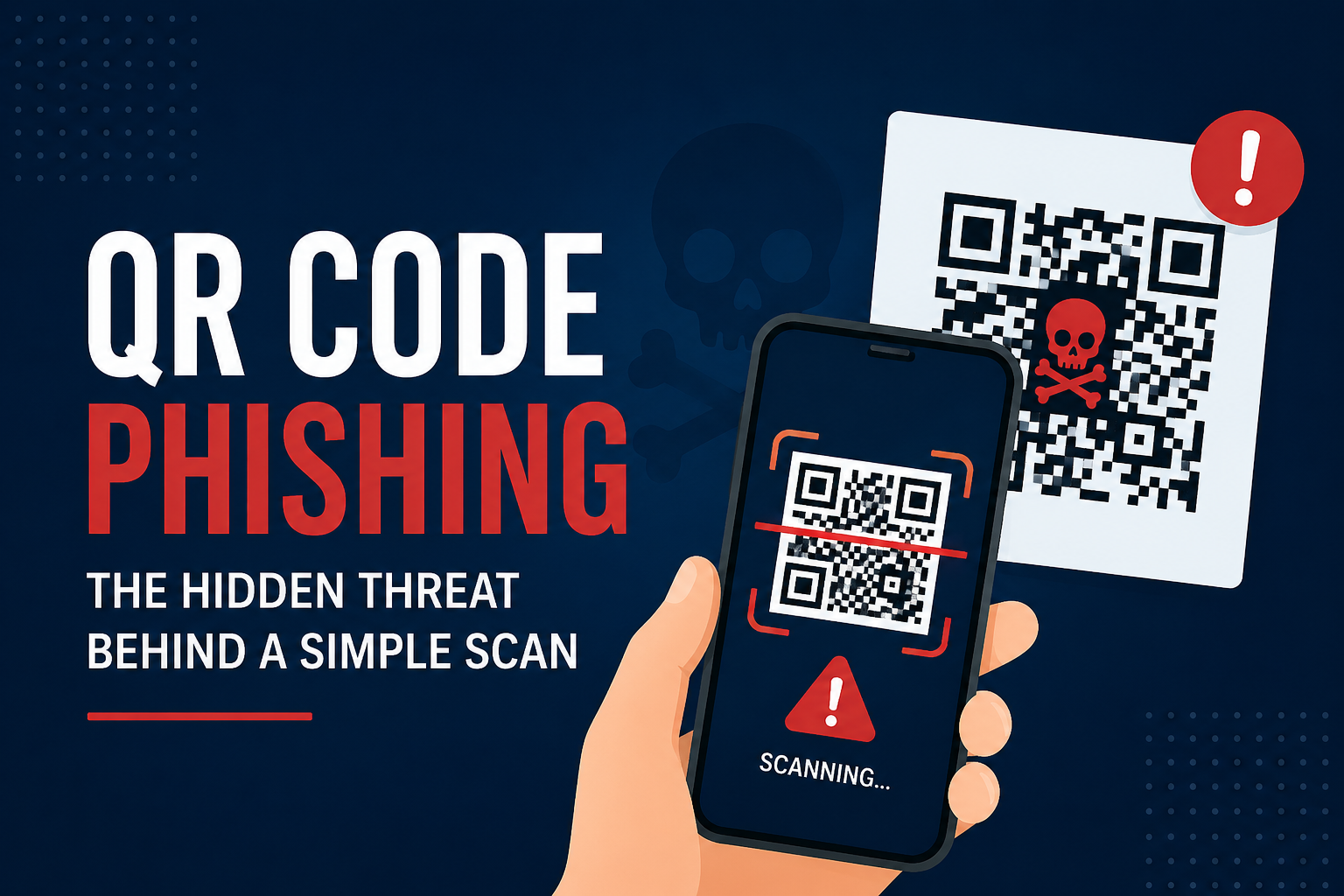
QR Code Phishing (Quishing): The Hidden Threat Behind a Simple Scan
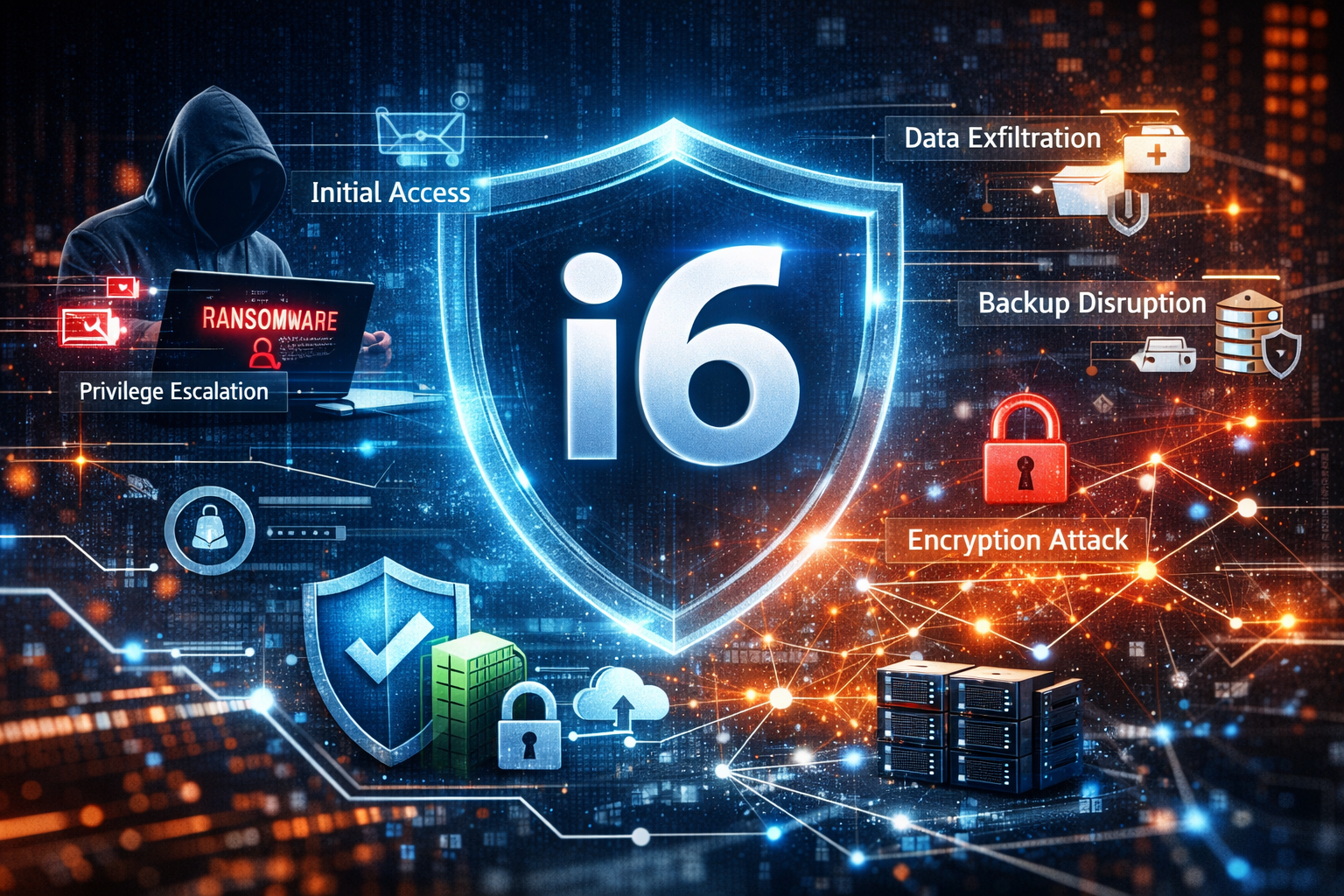
Modern ransomware campaigns are not chaotic attacks. They are structured intrusions that move deliberately through a kill chain: initial access, privilege escalation, lateral movement, data exfiltration, backup destruction, and finally encryption.
At 𝗶𝟲, the defense model is engineered to disrupt that chain at multiple control points.
The objective is not to respond to encryption.
It is to prevent the attack from ever reaching that stage.
Ransomware often begins with exposure — an unpatched service, an exposed RDP gateway, a misconfigured VPN, or an over-privileged account.
𝗶𝟲 continuously maps the full digital estate across on-prem infrastructure, hybrid environments, cloud workloads, endpoints, and identity systems. This visibility allows early identification of high-risk conditions such as:
Unlike periodic assessments, exposure monitoring is continuous. When risk changes, visibility changes immediately.
Reducing entry points directly lowers compromise probability.
Today, identity is the perimeter.
Most ransomware operators rely on credential abuse rather than zero-day exploits. Once valid credentials are obtained, attackers appear legitimate.
𝗶𝟲 applies identity-centric controls that monitor authentication telemetry, privilege assignments, token behavior, and session anomalies. Detection logic focuses on patterns such as impossible travel logins, privilege escalation anomalies, service account misuse, and abnormal MFA interactions.
The purpose is not simply verifying a login — but validating whether that login behavior aligns with expected patterns.
When identity misuse is detected early, lateral expansion becomes significantly harder.


Encryption is only the final phase of the attack.
The real damage occurs during preparation: reconnaissance, privilege escalation, and lateral movement.
𝗶𝟲 leverages behavioral analytics and deep telemetry from endpoints, servers, and network layers to identify:
Instead of relying solely on file signatures, detection models evaluate deviations from established behavioral baselines.
This shifts detection earlier in the attack lifecycle — where disruption is far more effective.
Modern ransomware is driven by double extortion. Data theft frequently precedes encryption.
𝗶𝟲 monitors for staging behavior such as abnormal archive creation, high-volume outbound encrypted transfers, unauthorized cloud uploads, and DNS-based tunneling patterns.
By identifying data aggregation and transfer activity before completion, attacker leverage can be removed.
Encryption without leverage becomes less effective.
Attackers commonly attempt to disable recovery before deploying ransomware.
𝗶𝟲 treats backup systems as protected assets, enforcing immutable configurations, administrative separation, access anomaly detection, and continuous validation of restore capability.
Recovery readiness is tested — not assumed.
Resilience is designed into the architecture.
Speed determines whether an incident becomes a disruption or a crisis.
When high-confidence indicators emerge, 𝗶𝟲 enables immediate containment through endpoint isolation, account suspension, session revocation, and command-and-control blocking. Forensic readiness ensures evidence is preserved for investigation and compliance needs.
The goal is controlled containment — limiting spread before enterprise-wide impact occurs.
By aligning technical controls to the ransomware lifecycle, 𝗶𝟲 transforms security posture from reactive alert handling to proactive lifecycle disruption.
Instead of waiting for encryption alerts, the model focuses on detecting:
Ransomware succeeds when visibility is fragmented and response is delayed.
𝗶𝟲 operates on a different principle — one built on continuous telemetry, behavioral intelligence, controlled privilege, and engineered resilience.
𝗥𝗮𝗻𝘀𝗼𝗺𝘄𝗮𝗿𝗲 𝗶𝘀 𝗻𝗼𝘁 𝗮 𝗺𝗮𝗹𝘄𝗮𝗿𝗲 𝗽𝗿𝗼𝗯𝗹𝗲𝗺 — 𝗶𝘁 𝗶𝘀 𝗮 𝘃𝗶𝘀𝗶𝗯𝗶𝗹𝗶𝘁𝘆 𝗮𝗻𝗱 𝗰𝗼𝗻𝘁𝗿𝗼𝗹 𝗽𝗿𝗼𝗯𝗹𝗲𝗺. 𝗪𝗵𝗲𝗿𝗲 𝗼𝘁𝗵𝗲𝗿𝘀 𝗿𝗲𝗮𝗰𝘁 𝘁𝗼 𝗲𝗻𝗰𝗿𝘆𝗽𝘁𝗶𝗼𝗻, 𝗶𝟲 𝗲𝗹𝗶𝗺𝗶𝗻𝗮𝘁𝗲𝘀 𝘁𝗵𝗲 𝗮𝘁𝘁𝗮𝗰𝗸 𝗯𝗲𝗳𝗼𝗿𝗲 𝗶𝘁 𝗯𝗲𝗰𝗼𝗺𝗲𝘀 𝗮 𝗯𝘂𝘀𝗶𝗻𝗲𝘀𝘀 𝗰𝗿𝗶𝘀𝗶𝘀.
Get a free cybersecurity assessment from our experts. We’ll scan for vulnerabilities, identify threats.
+91-638.520.3666

i6 is a modern cybersecurity company dedicated to protecting businesses from digital threats. With expert solutions, 24/7 monitoring, and proven strategies, we secure your future in a connected world.