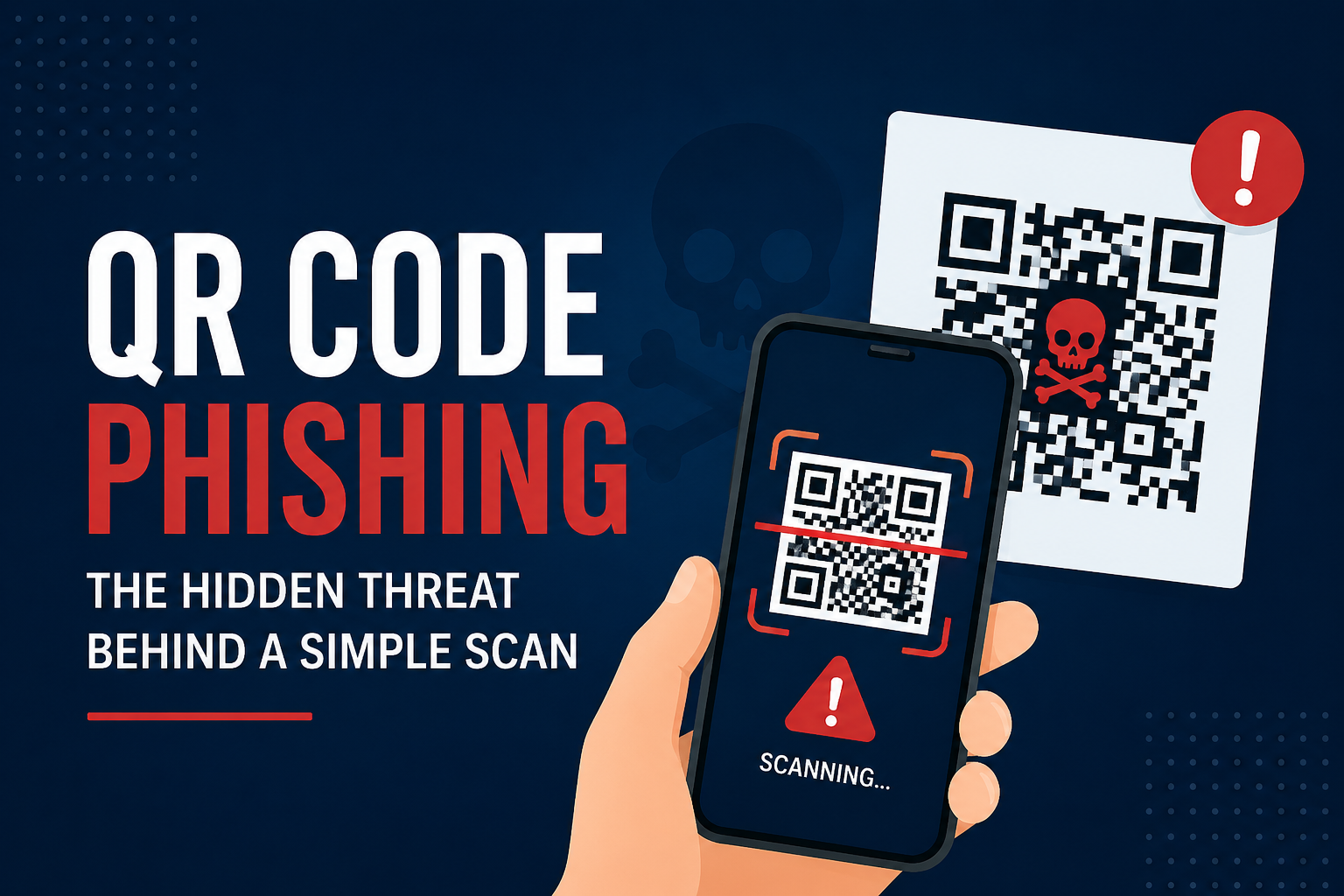
QR Code Phishing (Quishing): The Hidden Threat Behind a Simple Scan
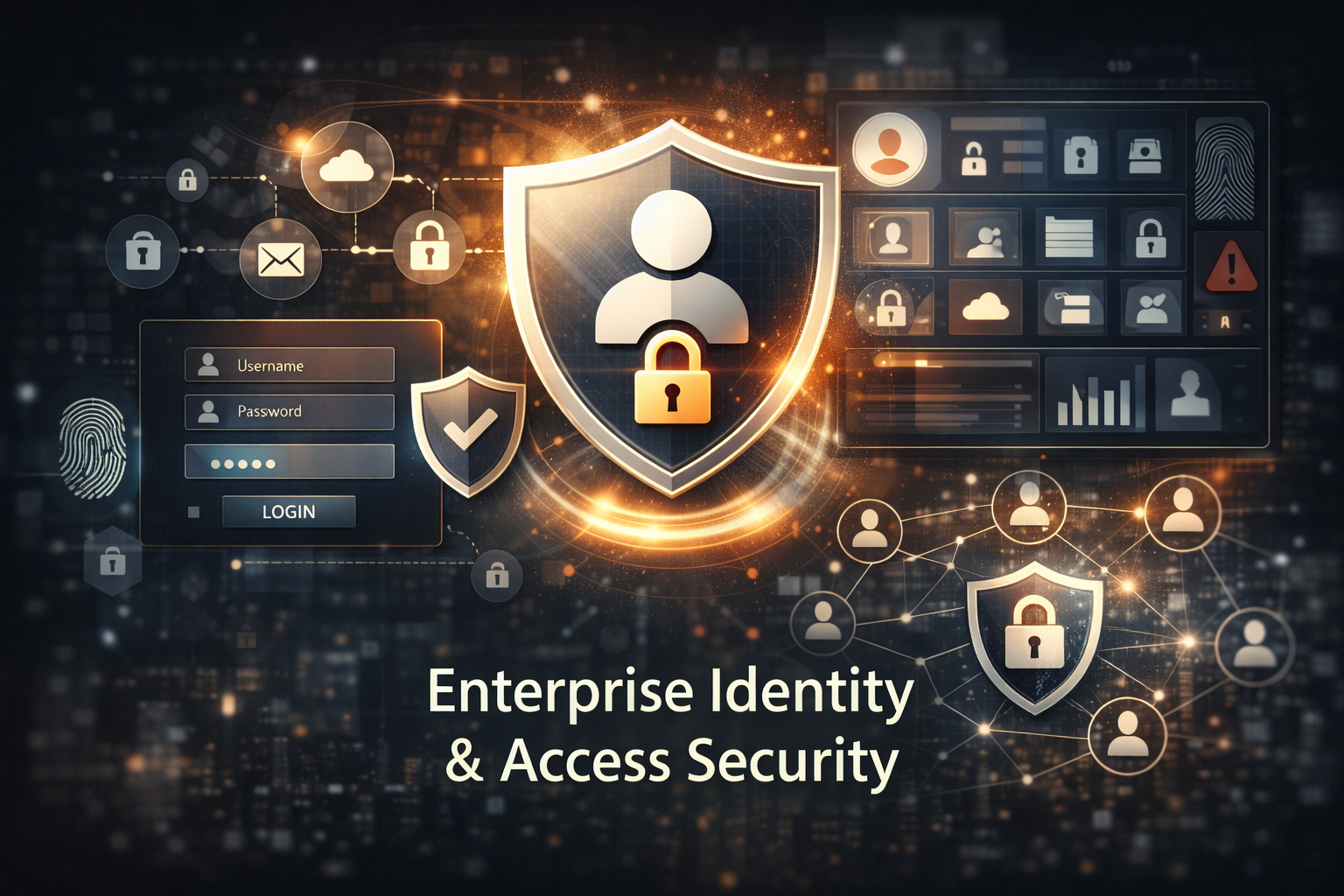
Enterprise security has fundamentally changed.
As organizations expand across cloud environments, SaaS platforms, hybrid infrastructure, and remote work models, traditional network perimeters no longer define security boundaries. Firewalls and physical segmentation have been replaced by identity-driven access control.
Today, identity determines who can access systems, data, applications, and infrastructure. When identity is compromised, attackers gain legitimate access pathways — making detection more complex and impact more severe.
Securing identities is no longer a supporting control. It is the foundation of enterprise security.
Modern attackers do not always “break in.” They log in.
They exploit identity through:
When attackers operate with valid credentials, malicious activity often blends into legitimate user behavior. This makes identity compromise one of the most dangerous forms of enterprise exposure.
For example, AI-powered systems can monitor network traffic 24/7 and immediately detect anomalies—like an unexpected data transfer or unauthorized login attempt. These systems continuously learn from each interaction, becoming smarter and more effective over time.


Many organizations deploy MFA and assume identity risk is mitigated. However, deeper structural weaknesses often persist.
Excessive administrative privileges accumulate over time. Service accounts retain permanent elevated access. Role changes are not reflected in access updates. Cloud permissions are granted broadly for operational convenience.
This creates privilege sprawl.
When compromise occurs, attackers move laterally through existing trust relationships. They do not need to bypass new defenses — they exploit existing access.
Identity risk is frequently the result of unmanaged trust rather than missing security tools.
Effective identity risk mitigation requires governance, monitoring, and architectural discipline.
Access rights must align strictly with business necessity. Implement least-privilege principles across all roles and conduct continuous access reviews to eliminate stale accounts and unnecessary permissions.
Privileged access should be time-bound and approved through structured workflows rather than granted permanently.
Multi-factor authentication should be enforced across sensitive systems, but it must be paired with contextual access policies. Device posture, location, behavioral patterns, and risk scoring should influence authentication decisions.
Session lifetimes must be controlled, and organizations must maintain the ability to revoke active sessions immediately if compromise is suspected.
Authentication logs alone are not enough. Behavioral analytics should identify unusual login times, geographic inconsistencies, abnormal privilege usage, and suspicious lateral movement.
Reducing attacker dwell time significantly lowers overall business impact.
Service accounts, API keys, and automation credentials must follow strict governance. Credentials should be rotated regularly, permissions tightly scoped, and activity monitored continuously.
Machine identities often represent the quietest and most persistent attack vector if left unmanaged.
Even strong controls cannot eliminate all risk. Network segmentation and workload isolation reduce blast radius and prevent attackers from expanding across environments.
Identity security must integrate with broader architectural containment planning.
At 𝗜𝟲, identity security is engineered as a strategic control layer.
We conduct comprehensive identity posture assessments across Active Directory and cloud IAM environments to identify privilege sprawl and escalation pathways.
We design and implement least-privilege frameworks, tiered administrative structures, and structured governance models that reduce unnecessary trust relationships.
Our detection engineering programs focus specifically on identity abuse techniques, including credential misuse, token anomalies, and privilege escalation signals.
Finally, identity controls are aligned with segmentation and incident response planning to ensure that even if compromise occurs, impact is contained.
At 𝗜𝟲, we help enterprises move from reactive defense to structured identity control — reducing escalation paths before attackers can exploit them.
The question is not whether identities will be targeted.
The question is whether your enterprise is prepared.
Get a free cybersecurity assessment from our experts. We’ll scan for vulnerabilities, identify threats.
+91-638.520.3666

i6 is a modern cybersecurity company dedicated to protecting businesses from digital threats. With expert solutions, 24/7 monitoring, and proven strategies, we secure your future in a connected world.