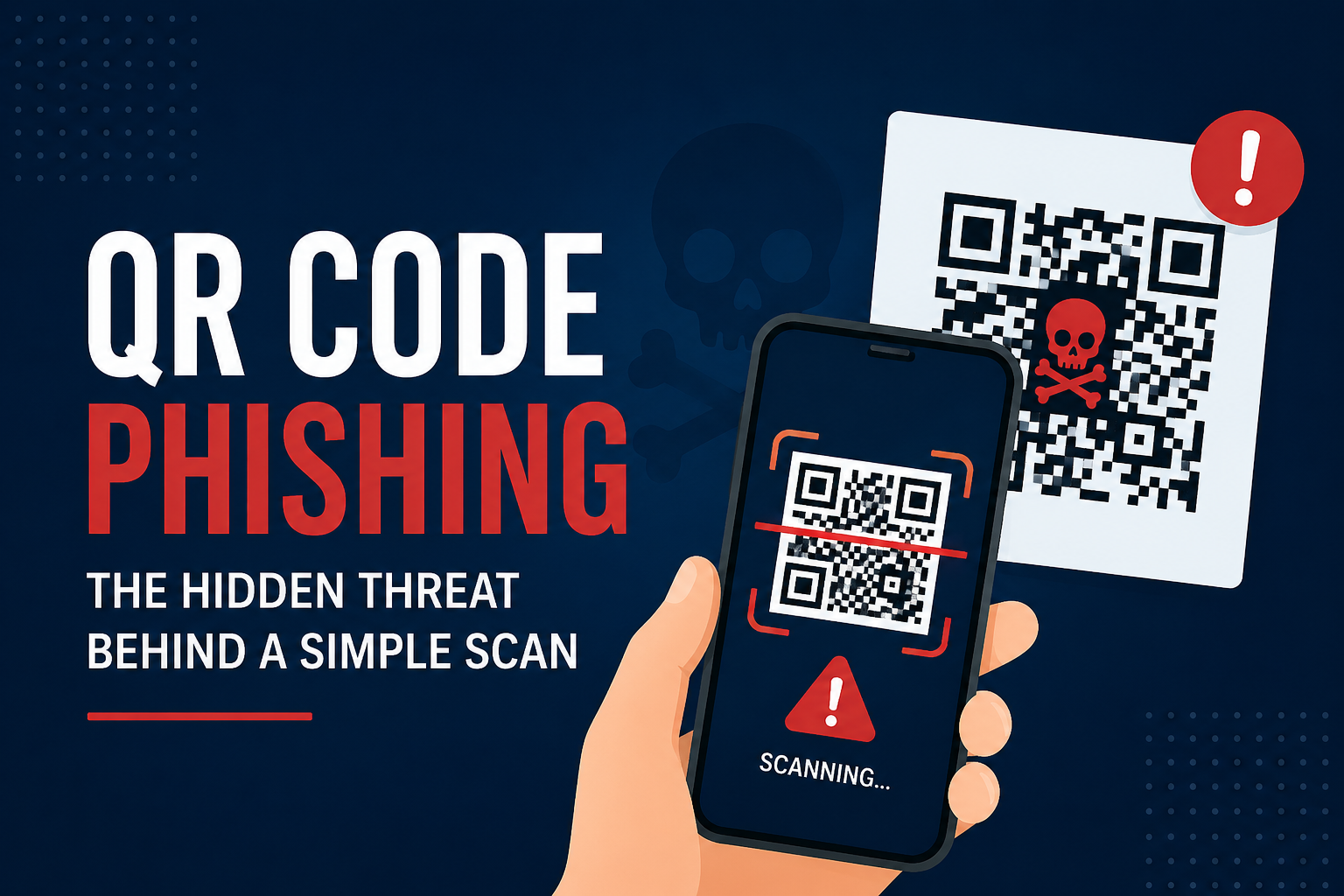
QR Code Phishing (Quishing): The Hidden Threat Behind a Simple Scan
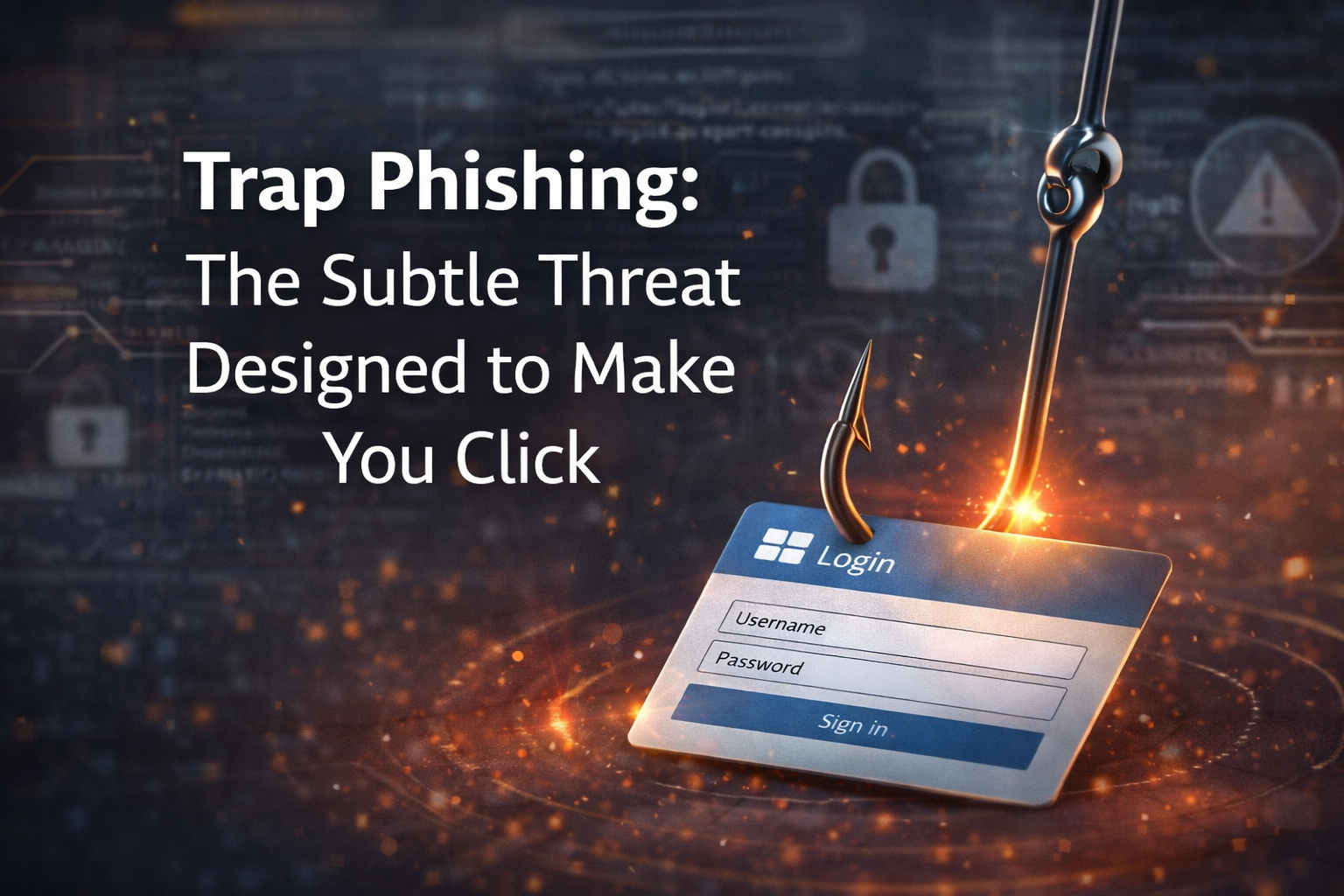
Phishing attacks are no longer just about urgency and panic. Modern attackers have evolved beyond obvious scare tactics. Today, some of the most successful phishing campaigns rely on something far more subtle — carefully designed traps.
Often referred to as trap phishing, this method focuses on luring victims into willingly interacting with malicious content. There is no dramatic warning, no aggressive deadline. Instead, the attack blends seamlessly into normal digital workflows.
And that is what makes it dangerous.
Trap phishing is a tactic where attackers create a believable scenario that encourages voluntary action from the victim. Rather than forcing urgency, the attacker designs a convincing “bait” that feels routine, relevant, or even beneficial.
The victim clicks a link, opens a shared document, downloads a file, or enters credentials — not because they were pressured, but because the interaction appears legitimate.
The compromise happens quietly.
Trap phishing typically follows a structured approach:
First, the attacker studies the target environment. This could include analyzing job roles, common cloud platforms used by the organization, or ongoing business processes.
Next, they craft a believable lure. This might include:
The final stage is credential harvesting or malware delivery. The victim interacts with the trap, unknowingly providing access.
Because the interaction feels normal, suspicion is low.
Imagine an employee receives an email stating:
The branding looks accurate. The sender name appears legitimate. The link leads to a login page identical to the organization’s Microsoft 365 portal.
The employee enters their credentials.
Nothing unusual happens. The document page may even display an error.
But in seconds, those credentials are transmitted to the attacker.
No malware warning. No suspicious pop-up. No visible damage.
Just a silent account takeover.
Traditional phishing relies heavily on urgency. Messages such as “Your account will be suspended” or “Immediate action required” trigger emotional reactions.
Trap phishing relies on familiarity.
It mimics everyday workflows — document sharing, invoice approvals, HR communications, cloud storage access. Because these actions are routine, users rarely pause to question them.
Additionally, trap phishing often bypasses basic email filters because:
The result is a low-noise, high-impact attack.
Trap phishing frequently leads to Business Email Compromise (BEC). Once attackers gain valid credentials, they no longer need to trick the victim repeatedly.
They log in directly.
From there, they can:
Because login activity may appear legitimate, detection becomes more complex.
Trap phishing is not just an email problem. It is an identity, detection, and visibility problem. That is why 𝗶𝟲 approaches it through layered detection engineering rather than relying on a single control.
𝗶𝟲 begins by strengthening identity protection. Phishing-resistant multi-factor authentication and conditional access policies reduce the effectiveness of stolen credentials. Even if a user enters credentials into a fake portal, access attempts from abnormal locations or devices are flagged immediately.
Beyond identity controls, 𝗶𝟲 focuses on behavioral detection. Instead of relying solely on signature-based email filtering, detection logic is tuned to monitor post-authentication activity. This includes:
This ensures that even if a trap succeeds, the attacker’s movement does not go unnoticed.
𝗶𝟲 also continuously refines detection rules based on real-world incident learnings and threat intelligence updates. Cloud infrastructure changes, new phishing kits, and evolving attacker techniques are incorporated into detection tuning cycles.
Automation is applied carefully. Low-risk anomalies are handled through predefined workflows, while high-risk identity events are escalated with enriched context for rapid investigation.
Finally, 𝗶𝟲 validates visibility through controlled testing and adversary simulation. Phishing simulations and red team exercises confirm that detection logic triggers correctly under real attack conditions.
The objective is not just prevention.
It is early detection, rapid containment, and continuous refinement.
Get a free cybersecurity assessment from our experts. We’ll scan for vulnerabilities, identify threats.
+91-6385203666

i6 is a modern cybersecurity company dedicated to protecting businesses from digital threats. With expert solutions, 24/7 monitoring, and proven strategies, we secure your future in a connected world.